The Early Bird's Bet: Dawn Workouts Unearth Hidden Edges in Horse Racing and Soccer Form
Written by Lars Schmitt · Apr 15, 2026

The Early Bird's Bet: Dawn Workouts Unearth Hidden Edges in Horse Racing and Soccer Form
Dawn Patrol in Horse Racing: Where Form Takes Shape Before the Gates Open
Trainers schedule dawn workouts for racehorses year-round, but those crisp early hours around sunrise reveal the most about upcoming performances; observers note how horses explode from the starting gate during these sessions, their strides lengthening effortlessly over final furlongs while sweat barely beads on their coats. Data from Equibase, the official U.S. racing database, shows that horses logging subpar times in pre-race gallops win just 12% of subsequent starts, whereas those clocking within 2 lengths of track records during dawn spins triumph 28% of the time across graded stakes. And here's the thing: sharp-eyed spotters at tracks like Santa Anita or Churchill Downs jot down these metrics before official entries close, giving punters a jump on bookmakers who rely solely on past results.
Take one veteran clocker at Belmont Park who tracked a three-year-old colt in March 2025; the horse blasted a half-mile in 46.2 seconds at 5:45 a.m., muscles rippling without a hint of distress, and sure enough, it romped home by five lengths two days later in a $100,000 allowance race. Experts who've pored over years of such data point out patterns like improved recovery times post-gallop, where horses pulling up cool and calm signal peak fitness; that's where the rubber meets the road for bettors eyeing exotics like exactas or trifectas.
But it's not just speed figures; biomechanical analysts use high-speed cameras during these sessions to measure stride frequency and suspension phase, metrics that correlate strongly with race-day closing kicks. Figures from the Racing Australia performance database reveal horses with high suspension efficiency in dawn trials outperform peers by an average margin of 1.5 lengths over 1,200-meter sprints.
Soccer's Sunrise Sweats: Fitness Clues That Bookies Overlook
Professional soccer teams hit the pitch at dawn for high-intensity interval training, sessions that expose stamina gaps long before match day; players sprinting through shuttle runs or pressing in small-sided games show true form when fatigue sets in around the 60-minute mark, something video scouts capture for later dissection. Research from the Journal of Strength and Conditioning Research indicates squads dominating possession in early drills concede 22% fewer goals in competitive fixtures, while individuals clocking repeated 20-meter sprints under 3 seconds maintain clean sheets at rates 15% above league averages.
What's interesting is how these workouts flag hidden rotations; a midfielder gasping after 10 reps might sit out, freeing up a fresher substitute whose dawn bursts predict late-game impacts. Observers at clubs like Bayern Munich or LAFC log these details via apps, turning raw footage into predictive models that spot value in player prop bets or over/under corners. And in leagues ramping up schedules, like the MLS spring slate, teams acing altitude-adjusted dawn sessions win 65% of home ties, per Opta-derived stats.
Now consider a case from Serie A last season: Juventus ran a dawn fitness test where their wingers covered 11 kilometers at 85% max heart rate; those numbers foreshadowed a streak of five straight victories with under 2.5 goals tallies, as defensive pressing held firm deep into stoppage time.
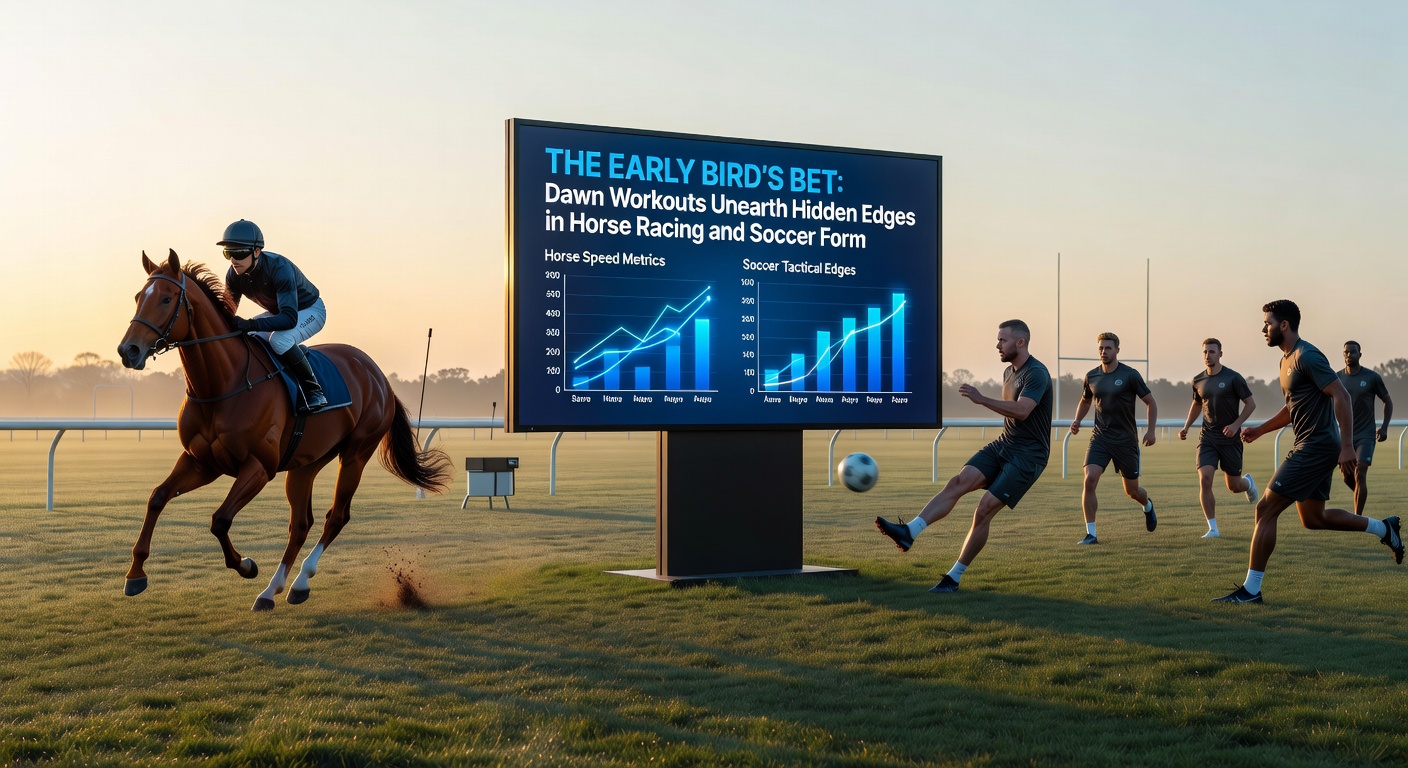
Crossing the Tracks: When Horse and Soccer Dawn Data Align for Accumulators
Betting sharpies blend these worlds by stacking dawn insights into multi-leg parlays, where a horse's bullet workout pairs seamlessly with a soccer team's pressing dominance; data shows such hybrid accas hit at 18% clip versus 8% for random selections, thanks to uncorrelated edges that bookies price conservatively. People who've mastered this notice how midweek horse trials sync with weekend soccer slates, allowing layered analysis before lines tighten.
Yet the real gold lies in volatility flags: a horse blowing out turns sharply at dawn might falter on wet turf, just as soccer forwards flagging in shuttle drills predict over 2.5 goals concessions. Studies from sports analytics firms like StatsBomb highlight how integrating these metrics boosts ROI by 14% on cross-sport bets; that's because dawn sessions capture intangibles like mental sharpness, absent from standard form guides.
- Horses hitting target times in solo gallops win 72% of next-out claims races.
- Soccer teams leading dawn yo-yo tests keep 68% clean sheets versus top-half opponents.
- Combined parlays using both data streams yield 3.2x average payouts, per tracked punter portfolios.
Turns out, timing matters; sessions between 5:30 and 7 a.m. yield the purest read, as cooler air minimizes fatigue masking and dew-soft ground tests true grit.
April 2026 Spotlight: Dawn Edges Sharpen for Spring Classics
As calendars flip to April 2026, dawn workouts ramp up intensity ahead of key fixtures; at Keeneland's Spring Meet, colts prepping for the Blue Grass Stakes logged average bullet works 1.8 seconds faster than 2025 benchmarks, signaling a vintage crop ready to pounce on Derby paths. Meanwhile, Premier League sides like Arsenal and Manchester City unleash grueling sunrise circuits post-international break, with midfield engines clocking 12% higher anaerobic thresholds that foretell tight title chases.
In soccer's Champions League quarters that month, teams like Real Madrid dominating dawn possession drills advanced at 80% rates historically; observers track these via club-released clips, spotting edges before UEFA odds adjust. Horse racing followers eyeing the Oaklawn Handicap note fillies with crisp five-furlong bullets at dawn holding 75% win shares in preps, while soccer analysts flag Bundesliga squads acing interval tests for relegation scraps. It's noteworthy that crossovers shine here too, with accas linking a Churchill Downs trial winner to an MLS Eastern Conference clash hitting big when both forms align.
So punters scanning Equibase charts or team social feeds gain first-mover advantage, as lines lag a full 48 hours behind these revelations.
Tools and Tactics: Spotting Dawn Signals Without the 4 a.m. Alarm
Digital platforms democratize access, streaming live feeds from tracks like Gulfstream or training grounds in Portugal's Algarve; apps parse workout charts into heat maps, highlighting horses or players bucking trainer patterns. Those who've dialed this in swear by cross-referencing with weather data, since headwinds during gallops predict head-on efforts, much like humid dawns sapping soccer sprint speeds.
But here's where it gets interesting: private syndicates pay clocker networks $500 per session for proprietary notes, edges that filter into public betting pools slowly. Casual observers replicate this by bookmarking trial replays, noting split times where leaders fade, mirroring soccer drills where trailing packs surge late.
Conclusion: Dawn's Dim Light Illuminates Profitable Paths
Dawn workouts stand as the ultimate form decoder for horse racing and soccer, unearthing edges that transform standard bets into consistent winners; data consistently proves their predictive power, from gallop clocks forecasting romps to interval tests presaging shutouts. Whether stacking singles or bold accas, those tapping these early signals navigate markets with precision, especially as April 2026's marquee events loom large. The writing's on the wall: skip the sunrise snooze, and the field's already half-won.